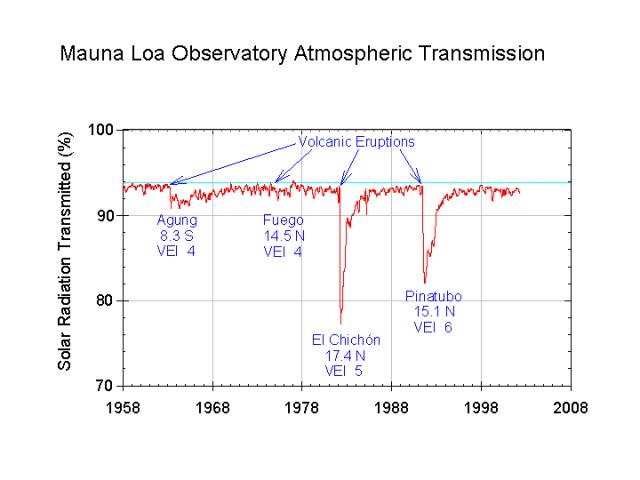
I must add this article now and preserve and share it. It has relevance to the on-going debate surrounding the myth of man-caused global warming, how it came to be, and why it persists. The fact that the scandal described in the following article originated at my alma mater is an aside. This issue affects all scientists and all of science. I welcome comments. (source)
Peter
Can of Worms
The UW’s worst scientific scandal in decades exposes the ways that external funding has increased the vulnerability of two of the university’s most valuable assets — its integrity and its graduate students.
By John Allen
On September 20, 2006, Irwin Goldman received an e-mail with good news — “exceptional news,” he wrote at the time — he’d never expected to hear, at least not from anyone at UW-Madison. Graduate student Amy Hubert PhDx’08 had made a breakthrough in her research, successfully identifying the piece of DNA in the nematode worm Caenorhabditis elegans that corresponds with a gene called laf-1.Laf-1 is important in sex determination among nematodes, which are typically hermaphroditic. Those that have a single laf-1 gene mutation develop as females. Those that have two die — thus “laf,” which stands for “lethal and feminizing.”No one ever said a worm’s life is easy.But, then, neither is a graduate student’s, and Amy Hubert’s has been harder than most.
Seven months earlier, she was working and studying in the lab of Elizabeth Goodwin, then a leading researcher in C. elegans genetics, when Goodwin was accused of scientific misconduct — essentially of misrepresenting her work in an application for federal funding. It was one of the most serious scandals in UW science, and even today, those connected to it are reluctant to talk about it. The university launched an investigation, and Goodwin soon resigned. UW-Madison had to give up thousands of grant dollars and still faces the possibility of sanction by the federal government.
The chief evidence against Goodwin came from Hubert and her graduate student colleagues, and the aftermath of the scandal has taken nearly as heavy a toll on them as it did on Goodwin. Of the seven people working in her lab — six graduate students and one research specialist — five are no longer at UW-Madison. Hubert hopes to complete her doctorate soon, which would make her the first member of the lab to do so.Her success may illustrate her academic skill, but the fact that she’s the only one from that team nearing graduation to date shows something else: the vulnerable position in which graduate students find themselves in the modern scientific world of grant-based research. Wholly dependent upon their faculty mentors for educational, financial, and career support, grad students lead a perilous life. And the increasingly competitive struggle among professors to win research grants only makes that peril more acute.
Chasing Phantoms
C. elegans is a model organism, one of a handful of species that scientists study closely to learn about general biological principles. There are a few others: several bacteria and yeasts, Arabidopsis plants, fruit flies, zebra fish, rats, and mice. Nematodes are useful as a model organism because they’re among the simplest creatures to possess a nervous system, they can be frozen and thawed without damaging their viability, and they reproduce rapidly — even more quickly than fruit flies. Nobel Prize-winner Sydney Brenner pioneered studies of C. elegans in the 1970s, making it a relatively recent entry into the roster of model species. As a result, says CALS associate dean Irwin Goldman PhD’91, “the C. elegans community is still relatively small and tight-knit.”That closeness is highlighted at WormBase, an online database that keeps records of the researchers who are working on C. elegans, cross-referencing mentors to protégés. Sydney Brenner, for instance, is listed as WB (WormBase) Person77. He was the mentor for David Hirsh, WBPerson259, a professor at Columbia who mentored Judith Kimble, WBPerson320. A biochemistry professor at UW-Madison, Kimble supervised Elizabeth Goodwin, WBPerson213, when she was a postdoctoral fellow. And Goodwin was the mentor to WBPerson3474, Amy Hubert.Hubert came to UW-Madison in 2001 from the north-central Kansas town of Concordia. Like many graduate students, she’d earned her previous degree elsewhere — a bachelor’s at the University of Kansas. She’d been attracted to the UW by its reputation as a leader in genetics, but she didn’t join Goodwin’s lab until spring 2002.“I liked Betsy [Goodwin] as an adviser,” Hubert says. “She was very friendly, very hands-on, always checking in with us about how our work was going.”
Goodwin was then one of the rising stars of the UW’s genetics department. “She was an extremely good citizen,” says Phil Anderson, another C. elegans expert (WBPerson21) and a professor of genetics. “She did more than her fair share of committee work, and she was very involved socially. She entertained prospective graduate students and helped recruit new faculty. She brought a genuine sense of joy to working here.”Goodwin’s lab was then one of only two or three in the world that were doing such advanced research into sex determination among nematodes, aiming to shed light on the importance of sexual reproduction in evolution. She was developing a hypothesis that laf-1 affected sex determination in C. elegans because it encoded a strand of “small RNA” — ribonucleic acid — instead of a conventional protein, which most genes encode. Such a discovery would have been a major coup, had she been able to prove it.“Within the last five or ten years,” says Anderson, “small RNAs have become very fashionable in research. There’s been a lot of exciting progress around small RNAs, and there’s a lot of mystery there.”But Hubert quickly lost conviction that Goodwin’s small RNA hypothesis was the right track. “When I first joined the lab,” she says, “I was getting the same results that Betsy and the others were. But I began to see that the laf-1 mutants weren’t all matching the prediction. Some of the results were just — well, they weren’t all that strong.”
While Goodwin continued to pursue the small RNA hypothesis, Hubert turned to more traditional approaches. She decided to revisit the question of laf-1’s identity by continuing to map its location in the C. elegans genome. “And the more mapping I did, the more it showed me that laf-1 was in a different spot from where everyone else [in the lab] was looking.”“Amy’s a real geneticist, while the rest of us were molecular biologists,” says one of her former lab partners, Mary Allen MS’06. “She was willing to take a long time and go back through the laf-1 work from the beginning, redoing the experiments and looking for inconsistencies. She was willing to go through the tedious process of looking at each generation of worms to see the phenotypes. I can remember her spending up to twelve hours in the lab, even on Saturdays. It was a lot of hard work, and a lot of time, but it paid off for her.”It was this difference of opinion that ultimately saved Hubert’s career at the UW. When the Goodwin affair blew up at the beginning of 2006, Hubert’s colleagues, whose work had all been intertwined with Goodwin’s search for small RNA, saw their years of labor vanish.“The project that Betsy was so committed to turned out to be a phantom,” says Anderson. “Laf-1 does not encode small RNA. And because that was a phantom, it wasn’t producing results, and it never would. The students who were chasing this phantom, they weren’t making any progress. Amy had the foresight — almost from when she first joined the lab — she had the good sense to challenge Betsy on this. She went back to the tried-and-true methods of mapping the DNA. Because of that, she was able to survive Betsy’s departure. That’s why she was able to make her breakthrough.”
Trying to Do Good
The Goodwin affair became public on February 23, 2006, when Goodwin resigned from the UW, bringing to a close three months of tension and quiet recriminations that had infected the members of her lab. She slipped quietly out of town and hasn’t spoken publicly about the allegations since, leaving her lawyers to respond to the charges. But her departure didn’t bring the affair to a close. In many ways, the difficulties were just beginning.The misconduct allegations leveled against Goodwin were, according to Bill Mellon, associate dean of the graduate school and head of the UW’s research compliance, among the most serious he’s heard in his twenty-nine years at UW-Madison, and certainly the most serious involving a tenure-track faculty member. But the university couldn’t just drop the issue upon Goodwin’s departure.“We had an obligation to investigate the charges,” says Mellon. “There were at least two federal grant applications involved, a renewal and an application for new funding, and we have to show the government that we’re serious about our honesty and the honesty of our scientists. So we had to carry out a long and detailed process — and I must say, Professor Goodwin’s absence made the process all the more difficult.”
Without Goodwin to answer the charges or explain her actions, investigators have struggled to determine just how far the damage goes. Mellon is confident that Goodwin wasn’t guilty of fraud — “she used the federal money to run the experiments she said she was going to run,” he says — and so far, no one has challenged the validity of the articles Goodwin has published. But the university had to report its findings to the federal government, and it hasn’t yet heard what the government’s Office of Research Integrity has to say about the Goodwin case.Still, if the process has been difficult for the university, it’s been even harder on Goodwin’s former students.At the time of the allegations, Goodwin’s lab employed six graduate students — Hubert, Allen, Garett Padilla MS’06, Chantal Ly MS’06, Sarah La Martina ’00, MS’06, and Jacqueline Baca — and one research specialist, Maya Fuerstenau ’04. In November 2005, Padilla discovered a discrepancy in the data that Goodwin was reporting in her grant renewal application. The application made it appear that the lab was producing favorable results, when in fact the data were incomplete, inconclusive, or worse. He brought this to the attention of his colleagues and to Goodwin.“At first, all we saw was that the data were wrong in one figure on one of the grants,” says Hubert. “After Garett talked to Betsy about it, she told him it was just a mistake, that the data had been placeholders. But the more we looked, the more we saw that seemed wrong. She was saying some experiments had been done that hadn’t been, and the figures that were being used to illustrate her results weren’t the correct figures. The conclusions she gave, in some cases, weren’t correct. Things had been relabeled, and we concluded that it couldn’t have just been a mistake. It had to be deliberate.”
The graduate students then faced a difficult decision — whether to report Goodwin to the university, knowing that, if they were wrong, it would ruin their relationship with their mentor and boss, and if they were right, it would destroy the research they’d been conducting for years.“We had a lot of discussion about what to do,” says Allen. “A lot of discussion. We were grappling with a big decision, and some people were afraid that they’d have to start over.”Eventually, however, the students came to a unanimous decision. “When we looked at it, though, there wasn’t really a choice,” says Hubert. “We wanted to believe [Goodwin]. We felt she was trying to do good for the lab. But we had to report it.”In December, they informed Mike Culbertson, chair of the genetics department. He reported the allegations to Mellon, and Mellon asked Irwin Goldman from CALS and Paul DeLuca, an associate dean of the School of Medicine and Public Health, to begin an informal inquiry to determine if there was any merit to the students’ allegations.
“We met with the students and with the professor, and we looked at the grant proposal and the data provided by the students, and it seemed clear that there was some attempt at deception,” says Goldman. “Betsy was giving one set of numbers to NIH [National Institutes of Health] and another to the students. This was clearly not a frivolous accusation.”While Goldman and DeLuca were gathering information, the lab environment was deteriorating. “We didn’t really know what was going on,” says Hubert. “We had spoken with the investigators, but were asked not to speak about Betsy to anyone else. At the same time, she was free to defend herself, and we had the feeling that she was bad-mouthing us around the department, saying that we were making mountains out of molehills and that we were out to get her. For a while, we got the feeling that we were the ones who were in the wrong.”As the situation progressed, the students felt increasingly betrayed and isolated. “It’s like there were two Betsys,” says Hubert. “The one who was my friend and who was so helpful, and then the one who had done this thing on her application. I couldn’t believe they were the same person. I still can’t.”
Goldman and DeLuca issued their recommendation to Mellon, reporting their opinion that the students’ charges had merit. Mellon then referred the matter to a formal investigative committee. And just as they began their work, Goodwin resigned. The committee finished its work a month later, concluding in a report to the Office of the Chancellor that Goodwin was guilty of the charges the students had leveled. The UW submitted its report to the Department of Health and Human Services, which oversees NIH, and returned what remained of her grant money.Within a few weeks, news about the misconduct spread through both the local and the scientific community, as major stories appeared in the Wisconsin State Journal and in the journal Science.“Once the report was delivered, I think it was clear that we’d been in the right,” Hubert says.But if they were vindicated, they were hardly safe. In reporting their mentor’s misconduct, they’d endangered their own careers as well.
Heroes
For Irwin Goldman, the key to the Goodwin affair isn’t ultimately what happens to Goodwin, but rather what happens to her former students. Hubert and her colleagues, he says, “displayed professional heroism. They put their careers at great personal risk for the sake of scientific integrity. That’s exactly the kind of people we want to attract into the sciences. These students risked a lot for the truth. They didn’t deserve to suffer for the actions of their mentor.”And yet when the students decided to come forward, it seemed likely that they would be punished nearly as severely as Goodwin. When she resigned and the university forfeited her funding, her lab closed down. That meant the students were out of work — no salaries, no tuition reimbursement, and perhaps worst of all, no research. That would mean no progress on their degrees, and possibly starting over. That, Goldman feels, is a poor reward for honesty.Unlike undergrads, graduate students are often more like apprentice academics, breaking into careers in science and research. Many parts of the university, including the College of Agricultural and Life Sciences, where Goldman works, are dependent upon them for carrying out research. Protecting these students from dishonest faculty isn’t just an issue of justice, he maintains; it’s a matter of the UW’s self-interest.“We have almost a thousand graduate students in this college alone,” he says. “We try to get the best students to want to spend five or more years here. And if we want to attract and keep them, we have to care about them and their vulnerability.”
So Goldman convinced his colleagues within CALS to guarantee that Goodwin’s students would receive funding for at least the remainder of the semester, and he began looking for avenues through which they could continue their studies. For Hubert, who was far advanced in her work, he found a home in the lab of Phil Anderson. Another student, Jacqueline Baca, who was nearer the beginning of her work, was also placed in a different lab. But the others, facing the realization that they would have to start over, left the UW. Allen left Madison to study worms under Tom Blumenthal at the University of Colorado-Boulder; Ly and La Martina found laboratory jobs in other states; and Padilla departed for law school.“We can’t give [students] back the time that they lose,” says Bill Mellon, “but we can try to protect them from financial disaster.”That’s what Goldman set out to do. After Goodwin resigned, he began work drafting a policy for CALS that would protect graduate students in the event of scientific misconduct by their mentors. It demands that the college “use its best effort to secure funding for CALS graduate students, including Research Assistants, Fellows, and Trainees, and research associates whose positions and funding may be jeopardized by his/her good faith disclosure of scientific misconduct.” Adopted last year, the policy “is the only one I know of in the country,” says Goldman, and it’s since become a model for a university-wide attempt to improve the grad-student safety net.
“If there’s a hero in all this, it’s Irwin,” says Anderson. “He not only did everything he could to do right by Betsy’s students, but he also pushed the rest of us to try to do right by them.”Still, there’s only so much that a college can do to protect its students from faculty upheaval. The policy only covers scientific misconduct, not any of the other ways that a professor might depart — death, for example, or by taking a position at another university or in government or industry. In those cases, the students are still left to scramble.“It’s depressing,” says Goldman, “and perhaps it’s a flaw in the university system that’s developed over the last hundred and fifty years. But we’re doing our best to protect these students, because they’re the future of science.”
Competition at the Mall
The root of all science may be, as that plaque outside Bascom Hall suggests, the spirit of untrammeled inquiry, but the fundamental basis of research in today’s world is money — in particular, grant money. This is what creates the temptation toward misconduct, and what makes protecting graduate students so difficult. Phil Anderson knows this well. In November 2007, he was going through the renewal application process for the one grant that keeps his lab running — a process that had consumed nearly all his time for more than two and a half months. The good news, he says, is that the application was finished; the bad news is that it was two weeks late, which, fortunately, the reviewers at the National Institutes of Health didn’t hold against him.A committee of perhaps thirty NIH scientists will judge that application, though it’s likely that only a couple will examine it closely. Though the committee members are competent researchers in their own right, the highly specialized nature of modern studies makes it unlikely that any of them will be as well versed in Anderson’s area of research as he is. That’s what creates the opportunity to falsify data on an application.“I’ve thought about Betsy a lot through this process,” he says. “What she did, I believe, happened because of the extreme pressure we’re all under to find funding.”
According to the National Science Foundation (NSF), UW-Madison is now the American university with the second-highest total of extramural research grant money — $905 million a year, when it’s all added up from every school, college, and department. That’s an average of $440,000 per faculty member, with some 90 percent of that money in the science and engineering fields. While that may seem like a lot of money, a great many things depend upon those grants, and the pressure to get them is severe. Take, for example, Anderson’s lab. The grant he’s applying for, an extension of the one that has funded his research for the last fourteen years, is worth $1.8 million during a four-year span. The university takes a share of this — some 48.5 percent — as overhead, what it calls facilities and administrative (F&A) costs. The rest, then, must pay for supplies: computers and microscopes and slides, not to mention C. elegans worms and the means to keep them alive and breeding. And it must pay for everyone who works in Anderson’s lab — his one assistant and three graduate students, covering their salaries and tuition reimbursements, and their own research, which will aid Anderson’s, but will also serve as the basis for the dissertations and other publications that will launch their academic careers.Should Anderson’s grant application fail, his salary will continue, but everything in the lab will shut down — the students and assistant will be laid off, the research halted, the worms discarded.“All of these things are paid for from outside sources,” he says. “In a way, the university is sort of like a big mall, and we’re all independent shops. We’ve got to come up with our own funding if we want to keep operating.”
But the competition is fierce and getting fiercer. There is a continual stream of new researchers — UW-Madison graduated 648 PhDs in 2005–06 alone — many of whom will seek funding for studies, and, as Anderson says, “you don’t get money for filling in the gaps; you have to be a pioneer” to be certain of winning a grant.In 2000, about one in every three applications for a grant from either NSF or NIH was successful. By 2007, that fraction had dropped to one in five. “For the most part, those are good scientists,” says Anderson. “They want to expand knowledge, and for most of them, there’s only one source of funding — the federal government. When they’re turned down, there’s no place else to go.”And that’s where the difficulty comes in for protecting graduate student whistle-blowers. It’s one thing for the university to guarantee that their funding won’t be eliminated should their professor be guilty of malpractice; it’s another to find the dollars to replace that funding once it’s lost. As he looks at pushing to make Irwin Goldman’s CALS plan a university-wide policy, Bill Mellon realizes that it will need more than morality. It will need money.“We’ll probably have to set up some sort of misconduct relief fund,” he says. “Fortunately, this sort of thing is very rare. But we’ll have to be prepared.”Such preparation is necessary, because the pressure to win extramural funding is so strong. Anderson believes that Goodwin is hardly the only scientist guilty of exaggerating to win a grant.“We’re all guilty of marketing ourselves, of casting our research in the light that makes it seem the most certain and revolutionary,” he says. “But the cardinal sin of science is misrepresenting one’s data. Openness, honesty, and fidelity to our data — those are what make science work.”
Forward
Two years after Elizabeth Goodwin’s resignation, her lab is still empty. It produces no income for the university, nor any research or educational benefits.Phil Anderson is still waiting to hear from the National Institutes of Health as to whether they’ll confirm his grant. His students’ futures — not to mention his own career advancement, and his research into nematode genetics — depend on the NIH’s answer. Irwin Goldman’s graduate student protection plan is likely to become university-wide policy this spring. “Morally, no one has any objections to it,” Bill Mellon says. “There may be a few tweaks here and there, but I expect it to pass this March.”At the same time, Mellon, who must shepherd the policy through approval by the faculty senate, has had his own grants to renew — his application for funding to study hormone action and vitamin D was due in February.And once Amy Hubert successfully defends her dissertation, she will walk across the stage and trade her nematodes for a sheepskin. According to Allen, Hubert is “a natural teacher,” and so she plans to take her career out of Madison and into someplace with less emphasis on lab results.“I’m hoping to get a position at a small college, where I can focus on teaching more than research,” Hubert says. “I’d still like to have my own lab, but I want to spend my time teaching and actually being in a lab, rather than holed up in an office writing grants. I don’t want that to be my whole job.”
John Allen is senior editor for On Wisconsin.
Sunday, July 20, 2008

Monday, June 30, 2008
Truth may enter the world by many doors, but she is never escorted by force.
A voice of reason....we need more of it. James Hansen is an enemy of science and a danger to all.
Peter
OPINION: SCIENCE BY INTIMIDATION
The Globe and Mail, 27 June 2008
http://www.theglobeandmail.com/servlet/story/RTGAM.20080627.corex28/BNStory/specialComment/home REX MURPHY
Truth may enter the world by many doors, but she is never escorted by force. I thought that was a lesson learned long ago, and learned by none more tellingly than scientists. Real scientists, actually, have learned it. A new amalgam has emerged however, the scientist-activist, and for that specimen it's a lesson passed by.In the dawn of the Enlightenment, it was scientists who were hauled before tribunals and inquisitions. Galileo is the arch example, the pioneer empiricist who rejected the ancient Earth-centric model of the (then known) universe, and for his pains earned the attention and wrath of the distinctly unscientific Inquisition.
I am drawn to these thoughts, and to the long-decayed example of the Inquisition, by a most curious outburst this week by James Hansen, the principal voice of NASA on the subject of global warming, a man who played - as it were - John the Baptist to Al Gore's messianic teachings on the subject. Dr. Hansen is largely credited with "sounding the alarm" on man-made global warming, and he has been a persistent, high-profile and very aggressive proponent of the cause for over two decades now. Dr. Hansen doesn't take kindly to those who dispute his apocalyptic scenarios. I choose the term, apocalyptic, deliberately.
According to Dr. Hansen, mankind may have reached the tipping point with global warming. Should that be the case, wide-scale calamity and catastrophe are inevitable. And should we not have reached the point of absolute crisis, should there be a minuscule interval for the human species to act and avert the very worst, according to Dr. Hansen, what yet remains to be faced is still horrible enough indeed.
Not all the world shares Dr. Hansen's vision of imminent ecological Armageddon. Serious minds, seriously disinterested in the subject, throw up caveats all the time. They question the models of climatological speculation; they question the peculiar mix of man-made and other likely sources of climate dynamics; they question some of the data gathering and some of its interpretation; and they question the very maturity of the highly complex, and experimentally deficient science of global warming itself.
They seriously question, too, the massive policy prescriptions that are being insisted upon as necessary in response to the scientific determinations of man-made global warming. There is lots of room for different, honest opinion on questions so large and complex, questions at the terribly complicated intersection of science, politics and economics. But, to Dr. Hansen's agitated mind, those who raise such questions, who inject skepticism into the global warming debate, are "deniers." The word here is becoming commonplace, but it remains a singular slur. A clutch of the global warming believers like to cast all who would argue with them into the polemical pit, the pit being that dissent from orthodox opinion on global warming as the equivalent of Holocaust denial. It is a shameless and vicious tactic, and hardly accords with the nobility that is suppose to drive the conscience of those out to save the planet.
Dr. Hansen is overfond of the specious and chilling analogy: He has written of the "crashing glaciers serv(ing) as a Krystal Nacht" and, although he later repented of the metaphor, compared coal trains to "death trains - no less gruesome than if they were boxcars headed to crematoria, loaded with uncountable irreplaceable species." This week, Dr. Hansen went a step even more noxiously forward. He called for a tribunal, or as I prefer to call it, an Inquisition, to put on trial for crimes against nature and humanity, the CEOs of the big oil companies who, according to Dr. Hansen's frantic view of things, feed the public "misinformation" about the climate crisis. Again the implicit model is to Nuremberg, as the man attempts to put concern for a future - let us call it a probability - on a moral and factual par with the unquestioned, historical, shattering enormity of the Nazi Holocaust.
Is this a scientist speaking? If so, it is more than curious that in the 21st century it is the scientist calling for the secular equivalent of an Inquisition. More to the point, are these the words of a man really certain of his truth, or one who - with the anxiety of the fanatic - is trying to shield it from all rigour of skepticism and inquiry? In either case, I do not question at all the assertion that it is the voice of a man who is neither a friend to reason or science. This is the voice of the scientist-activist consumed with his own virtue and fearful of all dispute. Science has no need of tribunals or trials, no need of Nuremberg justice, or analogies with the Holocaust. James Hansen's words this week were an offence, an offence against inquiry, against science, against moral seriousness. They were a piece of insolence against the idea of debate itself.
Copyright 2008, Globe and Mail
Peter
OPINION: SCIENCE BY INTIMIDATION
The Globe and Mail, 27 June 2008
http://www.theglobeandmail.com/servlet/story/RTGAM.20080627.corex28/BNStory/specialComment/home REX MURPHY
Truth may enter the world by many doors, but she is never escorted by force. I thought that was a lesson learned long ago, and learned by none more tellingly than scientists. Real scientists, actually, have learned it. A new amalgam has emerged however, the scientist-activist, and for that specimen it's a lesson passed by.In the dawn of the Enlightenment, it was scientists who were hauled before tribunals and inquisitions. Galileo is the arch example, the pioneer empiricist who rejected the ancient Earth-centric model of the (then known) universe, and for his pains earned the attention and wrath of the distinctly unscientific Inquisition.
I am drawn to these thoughts, and to the long-decayed example of the Inquisition, by a most curious outburst this week by James Hansen, the principal voice of NASA on the subject of global warming, a man who played - as it were - John the Baptist to Al Gore's messianic teachings on the subject. Dr. Hansen is largely credited with "sounding the alarm" on man-made global warming, and he has been a persistent, high-profile and very aggressive proponent of the cause for over two decades now. Dr. Hansen doesn't take kindly to those who dispute his apocalyptic scenarios. I choose the term, apocalyptic, deliberately.
According to Dr. Hansen, mankind may have reached the tipping point with global warming. Should that be the case, wide-scale calamity and catastrophe are inevitable. And should we not have reached the point of absolute crisis, should there be a minuscule interval for the human species to act and avert the very worst, according to Dr. Hansen, what yet remains to be faced is still horrible enough indeed.
Not all the world shares Dr. Hansen's vision of imminent ecological Armageddon. Serious minds, seriously disinterested in the subject, throw up caveats all the time. They question the models of climatological speculation; they question the peculiar mix of man-made and other likely sources of climate dynamics; they question some of the data gathering and some of its interpretation; and they question the very maturity of the highly complex, and experimentally deficient science of global warming itself.
They seriously question, too, the massive policy prescriptions that are being insisted upon as necessary in response to the scientific determinations of man-made global warming. There is lots of room for different, honest opinion on questions so large and complex, questions at the terribly complicated intersection of science, politics and economics. But, to Dr. Hansen's agitated mind, those who raise such questions, who inject skepticism into the global warming debate, are "deniers." The word here is becoming commonplace, but it remains a singular slur. A clutch of the global warming believers like to cast all who would argue with them into the polemical pit, the pit being that dissent from orthodox opinion on global warming as the equivalent of Holocaust denial. It is a shameless and vicious tactic, and hardly accords with the nobility that is suppose to drive the conscience of those out to save the planet.
Dr. Hansen is overfond of the specious and chilling analogy: He has written of the "crashing glaciers serv(ing) as a Krystal Nacht" and, although he later repented of the metaphor, compared coal trains to "death trains - no less gruesome than if they were boxcars headed to crematoria, loaded with uncountable irreplaceable species." This week, Dr. Hansen went a step even more noxiously forward. He called for a tribunal, or as I prefer to call it, an Inquisition, to put on trial for crimes against nature and humanity, the CEOs of the big oil companies who, according to Dr. Hansen's frantic view of things, feed the public "misinformation" about the climate crisis. Again the implicit model is to Nuremberg, as the man attempts to put concern for a future - let us call it a probability - on a moral and factual par with the unquestioned, historical, shattering enormity of the Nazi Holocaust.
Is this a scientist speaking? If so, it is more than curious that in the 21st century it is the scientist calling for the secular equivalent of an Inquisition. More to the point, are these the words of a man really certain of his truth, or one who - with the anxiety of the fanatic - is trying to shield it from all rigour of skepticism and inquiry? In either case, I do not question at all the assertion that it is the voice of a man who is neither a friend to reason or science. This is the voice of the scientist-activist consumed with his own virtue and fearful of all dispute. Science has no need of tribunals or trials, no need of Nuremberg justice, or analogies with the Holocaust. James Hansen's words this week were an offence, an offence against inquiry, against science, against moral seriousness. They were a piece of insolence against the idea of debate itself.
Copyright 2008, Globe and Mail
Monday, May 19, 2008
Global Warming Science Consensus? Not At All
At some point it seems the only scientists who will remain believers in man-caused global warming will be those who make their living promoting the concept. What will it take for politicians salivating over the opportunity to raise tax revenue from "carbon emissions" to realize they are wrong? When will the public wake up to the hoax that is man-caused global warming, and let their political leaders know they are not buying into the scam? Let us hope it is soon, before even more harm is done.
Peter
AND FINALLY: HOW MANY SCIENTISTS DOES IT TAKE TO OVERTURN A SCIENTIFIC CONSENSUS?
Financial Post, 17 May 2008
http://network.nationalpost.com/np/blogs/fpcomment/archive/2008/05/17/32-000-deniers.aspx
By Lawrence Solomon
Question: How many scientists does it take to establish that a consensus does not exist on global warming? The quest to establish that the science is not settled on climate change began before most people had even heard of global warming. The year was 1992 and the United Nations was about to hold its Earth Summit in Rio. It was billed as - and was - the greatest environmental and political assemblage in human history. Delegations came from 178 nations - virtually every nation in the world - including 118 heads of state or government and 7,000 diplomatic bureaucrats. The world's environmental groups came too - they sent some 30,000 representatives from every corner of the world to Rio. To report all this, 7,000 journalists converged on Rio to cover the event, and relay to the publics of the world that global warming and other environmental insults were threatening the planet with catastrophe.In February of that year, in an attempt to head off the whirlwind that the conference would unleash, 47 scientists signed a "Statement by Atmospheric Scientists on Greenhouse Warming," decrying "the unsupported assumption that catastrophic global warming follows from the burning of fossil fuels and requires immediate action."
To a scientist in search of truth, 47 is an impressive number, especially if those 47 dissenters include many of the world's most eminent scientists. To the environmentalists, politicians, press at Rio, their own overwhelming numbers made the 47 seem irrelevant.Knowing this, a larger petition effort was undertaken, known as the Heidelberg Appeal, and released to the public at the Earth Summit. By the summit's end, 425 scientists and other intellectual leaders had signed the appeal. These scientists - mere hundreds - also mattered for nought in the face of the tens of thousands assembled at Rio. The Heidelberg Appeal was blown away and never obtained prominence, even though the organizers persisted over the years to ultimately obtain some 4,000 signatories, including 72 Nobel Prize winners.
The earnest effort to demonstrate the absence of a consensus continued with the Leipzig Declaration on Global Climate Change - an attempt to counter the Kyoto Protocol of 1997. Its 150-odd signatories also counted for nought. As did the Cornwall Declaration on Environmental Stewardship in 2000, signed by more than 1,500 clergy, theologians, religious leaders, scientists, academics and policy experts concerned about the harm that Kyoto could inflict on the world's poor.
Then came the Oregon Institute of Science and Medicine's Petition Project of 2001, which far surpassed all previous efforts and by all rights should have settled the issue of whether the science was settled on climate change. To establish that the effort was bona fide, and not spawned by kooks on the fringes of science, as global warming advocates often label the skeptics, the effort was spearheaded by Dr. Frederick Seitz, past president of the National Academy of Sciences and of Rockefeller University, and as reputable as they come.The Oregon petition garnered an astounding 17,800 signatures, a number all the more astounding because of the unequivocal stance that these scientists took: Not only did they dispute that there was convincing evidence of harm from carbon dioxide emissions, they asserted that Kyoto itself would harm the global environment because "increases in atmospheric carbon dioxide produce many beneficial effects upon the natural plant and animal environments of the Earth.
"The petition drew media attention, but little of it was for revealing to the world that an extraordinary number of scientists hold views on global warming diametrically opposite to those they are expected to hold. Instead, the press focussed on presumed flaws that critics found in the petition. Some claimed the petition was riddled with duplicate names. They were no duplicates, just different scientists with the same name. Some claimed the petition had phonies. There was only one phony: Spice Girl Geri Halliwell, planted by a Greenpeace organization to discredit the petition and soon removed. Other names that seemed to be phony - such as Michael Fox, the actor, and Perry Mason, the fictional lawyer in a TV series - were actually bona fide scientists, properly credentialled.
Like the Heidelberg Appeal, the Oregon petition was blown away. But now it is blowing back. Original signatories to the petition and others, outraged at Kyoto's corruption of science, wrote to the Oregon Institute and its director, Arthur Robinson, asking that the petition be brought back. "E-mails started coming in every day," he explained. "And they kept coming. " The writers were outraged at the way Al Gore and company were abusing the science to their own ends. "We decided to do the survey again."Using a subset of the mailing list of American Men and Women of Science, a who's who of Science, Robinson mailed out his solicitations through the postal service, requesting signed petitions of those who agreed that Kyoto was a danger to humanity.
The response rate was extraordinary, "much, much higher than anyone expected, much higher than you'd ordinarily expect," he explained. He's processed more than 31,000 at this point, more than 9,000 of them with PhDs, and has another 1,000 or so to go - most of them are already posted on a Web site at petitionproject.org. Why go to this immense effort all over again, when the press might well ignore the tens of thousands of scientists who are standing up against global warming alarmism? "I hope the general public will become aware that there is no consensus on global warming," he says, "and I hope that scientists who have been reluctant to speak up will now do so, knowing that they aren't alone."At one level, Robinson, a PhD scientist himself, recoils at his petition. Science shouldn't be done by poll, he explains. "The numbers shouldn't matter. But if they want warm bodies, we have them."
Some 32,000 scientists is more than the number of environmentalists that descended on Rio in 1992.Is this enough to establish that the science is not settled on global warming? The press conference releasing these names occurs on Monday at the National Press Club in Washington.
Copyright 2008, Financial Post
Peter
AND FINALLY: HOW MANY SCIENTISTS DOES IT TAKE TO OVERTURN A SCIENTIFIC CONSENSUS?
Financial Post, 17 May 2008
http://network.nationalpost.com/np/blogs/fpcomment/archive/2008/05/17/32-000-deniers.aspx
By Lawrence Solomon
Question: How many scientists does it take to establish that a consensus does not exist on global warming? The quest to establish that the science is not settled on climate change began before most people had even heard of global warming. The year was 1992 and the United Nations was about to hold its Earth Summit in Rio. It was billed as - and was - the greatest environmental and political assemblage in human history. Delegations came from 178 nations - virtually every nation in the world - including 118 heads of state or government and 7,000 diplomatic bureaucrats. The world's environmental groups came too - they sent some 30,000 representatives from every corner of the world to Rio. To report all this, 7,000 journalists converged on Rio to cover the event, and relay to the publics of the world that global warming and other environmental insults were threatening the planet with catastrophe.In February of that year, in an attempt to head off the whirlwind that the conference would unleash, 47 scientists signed a "Statement by Atmospheric Scientists on Greenhouse Warming," decrying "the unsupported assumption that catastrophic global warming follows from the burning of fossil fuels and requires immediate action."
To a scientist in search of truth, 47 is an impressive number, especially if those 47 dissenters include many of the world's most eminent scientists. To the environmentalists, politicians, press at Rio, their own overwhelming numbers made the 47 seem irrelevant.Knowing this, a larger petition effort was undertaken, known as the Heidelberg Appeal, and released to the public at the Earth Summit. By the summit's end, 425 scientists and other intellectual leaders had signed the appeal. These scientists - mere hundreds - also mattered for nought in the face of the tens of thousands assembled at Rio. The Heidelberg Appeal was blown away and never obtained prominence, even though the organizers persisted over the years to ultimately obtain some 4,000 signatories, including 72 Nobel Prize winners.
The earnest effort to demonstrate the absence of a consensus continued with the Leipzig Declaration on Global Climate Change - an attempt to counter the Kyoto Protocol of 1997. Its 150-odd signatories also counted for nought. As did the Cornwall Declaration on Environmental Stewardship in 2000, signed by more than 1,500 clergy, theologians, religious leaders, scientists, academics and policy experts concerned about the harm that Kyoto could inflict on the world's poor.
Then came the Oregon Institute of Science and Medicine's Petition Project of 2001, which far surpassed all previous efforts and by all rights should have settled the issue of whether the science was settled on climate change. To establish that the effort was bona fide, and not spawned by kooks on the fringes of science, as global warming advocates often label the skeptics, the effort was spearheaded by Dr. Frederick Seitz, past president of the National Academy of Sciences and of Rockefeller University, and as reputable as they come.The Oregon petition garnered an astounding 17,800 signatures, a number all the more astounding because of the unequivocal stance that these scientists took: Not only did they dispute that there was convincing evidence of harm from carbon dioxide emissions, they asserted that Kyoto itself would harm the global environment because "increases in atmospheric carbon dioxide produce many beneficial effects upon the natural plant and animal environments of the Earth.
"The petition drew media attention, but little of it was for revealing to the world that an extraordinary number of scientists hold views on global warming diametrically opposite to those they are expected to hold. Instead, the press focussed on presumed flaws that critics found in the petition. Some claimed the petition was riddled with duplicate names. They were no duplicates, just different scientists with the same name. Some claimed the petition had phonies. There was only one phony: Spice Girl Geri Halliwell, planted by a Greenpeace organization to discredit the petition and soon removed. Other names that seemed to be phony - such as Michael Fox, the actor, and Perry Mason, the fictional lawyer in a TV series - were actually bona fide scientists, properly credentialled.
Like the Heidelberg Appeal, the Oregon petition was blown away. But now it is blowing back. Original signatories to the petition and others, outraged at Kyoto's corruption of science, wrote to the Oregon Institute and its director, Arthur Robinson, asking that the petition be brought back. "E-mails started coming in every day," he explained. "And they kept coming. " The writers were outraged at the way Al Gore and company were abusing the science to their own ends. "We decided to do the survey again."Using a subset of the mailing list of American Men and Women of Science, a who's who of Science, Robinson mailed out his solicitations through the postal service, requesting signed petitions of those who agreed that Kyoto was a danger to humanity.
The response rate was extraordinary, "much, much higher than anyone expected, much higher than you'd ordinarily expect," he explained. He's processed more than 31,000 at this point, more than 9,000 of them with PhDs, and has another 1,000 or so to go - most of them are already posted on a Web site at petitionproject.org. Why go to this immense effort all over again, when the press might well ignore the tens of thousands of scientists who are standing up against global warming alarmism? "I hope the general public will become aware that there is no consensus on global warming," he says, "and I hope that scientists who have been reluctant to speak up will now do so, knowing that they aren't alone."At one level, Robinson, a PhD scientist himself, recoils at his petition. Science shouldn't be done by poll, he explains. "The numbers shouldn't matter. But if they want warm bodies, we have them."
Some 32,000 scientists is more than the number of environmentalists that descended on Rio in 1992.Is this enough to establish that the science is not settled on global warming? The press conference releasing these names occurs on Monday at the National Press Club in Washington.
Copyright 2008, Financial Post
Saturday, May 10, 2008
Bin Gore, and his "Green Taliban".........
taking credit for a new phrase.....which may become famous.....and hereby crediting it to "Duckalou".....
Duckalou,
"Bin Gore, and his Green Taliban"
Oh man, I love it!!! Do you mind if the rest of "The Fellowship of Scientific Truth" uses your phrase?
"They should have thrown Bin Gore in jail for "Fraud" instead of giving this proven liar and hot C02 salesman the Noble Peace prize."
I just gotta love ya, what a wonderfully factual statement.
Duckalou,
"Bin Gore, and his Green Taliban"
Oh man, I love it!!! Do you mind if the rest of "The Fellowship of Scientific Truth" uses your phrase?
"They should have thrown Bin Gore in jail for "Fraud" instead of giving this proven liar and hot C02 salesman the Noble Peace prize."
I just gotta love ya, what a wonderfully factual statement.
Thursday, May 8, 2008
DEMOCRACY, GDP AND NATURAL DISASTERS
This rather lengthy essay states what to me at least, is, or should be, obvious. That is wealthier, Democratic countries suffer fewer deaths, injuries, and illness from natural disasters than other countries. They may suffer more economic damage, but only because they have more to lose. The lesson is if we truly care for all people, and truly want to alleviate suffering, the answer lies in improving people's standard of living and promoting Democracy and freedom. Trying to prevent natural disasters, or trying to "stop global warming" or "climate change" is sinfully, and tragically misguided, as I think the following study aptly illustrates.
Peter
DEMOCRACY, GDP AND NATURAL DISASTERS
Geotimes, October 2007
http://www.geotimes.org/oct07/article.html?id=feature_democracy.html
Gregory E. van der Vink and co-authors Amartya Sen won the Nobel Prize in economics in 1998 with the observation that there has never been a famine in a nation that has a democratic form of government and a free press. A similar relationship exists for natural disasters: Deaths associated with natural disasters are lower for nations with democratic forms of government and the associated higher national income, or Gross Domestic Product (GDP).
In general, the World Bank's Democracy Index, a measure of how strong a democracy is, and a nation's GDP are stronger predictors of a natural disaster's humanitarian impact (as measured by deaths) than either the size of the event or the population density in the area of the disaster.
Global increases in democracy and GDP may therefore partially explain the apparent paradox of the generally decreasing death toll associated with natural disasters despite the increased population density in high-risk areas. Natural Disasters Natural disasters result from encounters between natural events and human infrastructure and activity. It is logical, therefore, that the rapid global increase in human population should place more people in the path of natural events, raising both the number of natural disasters and their accompanying death tolls. In addition, climate change, sea-level rise and other environmental phenomena may be increasing both the severity and frequency of events such as floods, hurricanes and other extreme weather that can result in natural disasters.
A historical comparison of annual natural disaster occurrences and disaster-related deaths, however, is inconsistent with the assumed relationship. Despite the increase in natural disasters, reported deaths are actually decreasing - both as a percentage of global population and in total numbers. The average annual percentage of the global population killed by natural disasters decreased 10-fold from the period 1964 to 1968 compared with the period 2000 through 2004, from 0.01 percent (roughly one killed for every 10,000 people) to 0.001 percent (one in 100,000) respectively.
At the same time, the average annual number of recorded disasters increased five-fold between 1964 through 1968 (64 per year) and 2000 through 2004 (332 per year). The events that continue to result in the major number of fatalities are the relatively small percentage of events that occur with large recurrence intervals, such as massive floods, strong earthquakes and direct strikes from intense hurricanes, or events that are unusual in the area in which they occur.
Clearly, the impact of a natural disaster is not simply a function of the natural event itself, but is determined also by society's ability to respond to the disaster. Over the same time period that we observe a decreasing number of disaster deaths, two great global socioeconomic trends of the last half century have also occurred: democratization and economic development.
To evaluate the role that democracy and economic development play in reducing the humanitarian impact of natural disasters, we measured 133 countries' natural disaster death tolls against both their average democracy ranking and their average per capita GDP. We excluded only those nations with a population of fewer than 1 million people, or which have experienced five or fewer disasters between 1964 and 2004.
The Role of Democracy
More than 80 percent of the total global disaster deaths from 1964 to 2004 occurred in just 15 countries, including China, Ethiopia, Sudan, Indonesia and Bangladesh, among others. Of these fifteen nations, 73 percent are below the median global GDP and 87 percent are below the median democracy index. The democracy index is the average of the World Bank's Worldwide Governance Indicator values for voice and accountability, political stability, absence of violence, government effectiveness, regulatory quality, rule of law and control of corruption.
The exceptions to the trend that high GDP correlates with a low death toll after a natural disaster are Iran and Venezuela, both oil-rich countries with significant wealth but low democracy indices. Because the two outliers have high GDP and relatively high death tolls, they suggest that democracy, rather than GDP, may play the more pivotal role in reducing deaths from natural disasters. The strong exponential correlation between democracy and GDP, however, makes it difficult to differentiate the two.
El Salvador also stands out as an outlier. Despite its democratic ranking, the impoverished nation experiences a large number of deaths in the aftermath of a natural disaster. El Salvador does not have a very high democracy rating (-0.1) in general compared to the global median (-0.3). (By contrast, the U.S. democracy index is 1.4, and Finland, which has the world's highest democracy index, is 2.47.) In fact, El Salvador's democracy ranking may be misleading in the context of this analysis. Its democratic constitution was drafted only in 1983, after a long period of political instability and civil war.
Two common characteristics are notable in the countries in which the deadliest disasters have occurred since 1964. First, they all were (and many still are) developing nations: All except one (Peru) had a per capita GDP of less than $1,000 (U.S.) at the time of the disaster. Second, they were (again, many still are) non-democratic states: All except one (India) had a non-representative government or was at war (1965) when the disaster occurred, and India was facing a virtual war against militant Islamists.
Notably, the type of disaster (including earthquakes, storms and floods, for example) varies among the top 10, again implying that the characteristics of the disaster itself count for much less than the characteristics of the nation. The two unifying traits of the nations with the deadliest disasters or, more exactly, the two qualities distinctly lacking in these nations, are democracy and development.
Flooding in Nepal from last summer's monsoons killed hundreds and left millions across Southeast Asia homeless. Regions such as Nepal's Bardiya District in the southwest were particularly hard hit. New research indicates that countries with lower per capita GDP and a lower democracy index are more likely to face a lot of deaths when a disaster strikes than richer countries with stronger democracies.
In contrast, the three costliest disasters occurred in countries that are highly developed and highly democratic - the 1995 Kobe earthquake in Japan, 2005's Hurricane Katrina in the United States and an earthquake in southern Italy in 1980. However, the three costliest disasters resulted in a relatively miniscule number of deaths.
The dichotomy is striking: Natural disasters that occur in undeveloped, non-democratic nations result in a high humanitarian cost but a low economic cost, whereas natural disasters that occur in developed, democratic nations result in a low humanitarian cost but a high economic cost. There is clearly a link between democracy, development and the impact of natural disasters.
The strong exponential correlation between democracy and GDP makes it difficult to resolve the determining factor. In addition, the reason for the strong correlation between the World Bank's Democracy Index and per capita GDP is not fully known. Similarly, it is difficult to determine exactly which of the factors that go into the calculation of the World Bank's Democracy Index have the greatest influence in determining the relationship to the death toll. These considerations are beyond the resolution of our analysis.
What is clear, however, is that the death tolls associated with natural disasters are undeniably linked to level of democratic rule within the nation that the disaster occurs. The relationship between the humanitarian impact of a natural disaster and the democracy of the nation in which the disaster occurs is consistent with the relationship that Amartya Sen discovered between democracy and famine. Deaths from natural disasters are more likely to occur in nations with low levels of democratic rule.
Furthermore, we also calculated the pattern of humanitarian relief aid from both the Office of U.S. Foreign Disaster Assistance (OFDA) - the U.S. Agency for International Development's disaster assistance department - and the U.N. World Food Programme: The analysis indicates that the populations of less democratic nations are more vulnerable to natural disasters. Of the 577 World Food Programme grants awarded between 1987 and 2004, 92.5 percent were given to nations with negative democracy values. Only 12 countries with positive democracy values received aid, and only one (Botswana) had a democracy value greater than 0.5. The majority of both World Food Programme and OFDA aid grants are received by nations with negative democracy scores.
Grant numbers are corrected for the number of countries that fall into each democracy category, so the observed decrease cannot simply be explained by the larger number of less democratic countries. Taken together, data from the OFDA and the World Food Programme further enforce the previous finding that nations with low-levels of democratic rule are more likely to suffer severe humanitarian consequences from natural disasters. The spread of democracy over the last several decades may therefore partially explain why the total number of deaths associated with natural disasters is decreasing despite the increase in the number of events.
Reducing Hazard Vulnerability
Amartya Sen discovered that famines are distinctly non-natural phenomena. Certain climatic conditions, such as droughts, make famines more likely, but they are not the inevitable consequence of environmental circumstances. States and their citizens have the power to prevent, or bring about, as it may be, a famine - and likely other disasters. If famines are almost entirely within the control of governments and citizens, how are we to understand what are collectively referred to as "natural disasters"?
Such events as earthquakes, windstorms (hurricanes, typhoons, cyclones and tornadoes), landslides, volcanic eruptions, floods and droughts are referred to as "natural," implying that they are beyond the sphere of human influence and agency. But are they really? No state or society can prevent the occurrence of an event such as a hurricane or an earthquake. That is beyond the range of human capability. But one can not argue that disasters are wholly independent of human action. After all, a disaster is only a disaster if it affects humans themselves. That is, any natural disaster is the intersection of a natural event and a human population. But if we cannot prevent the event itself, we can certainly influence - reduce or exacerbate, depending on the circumstances - the impact of the immutable event.
Asked in another way, do certain characteristics of any given society or state predispose it to a greater impact or enable it to reduce the impact from natural disasters than states lacking or possessing in smaller or larger amounts those characteristics? And how is one to quantify the impact of a disaster: Should it be measured in terms of lives lost (humanitarian) or money spent (economic) or some combination of the two? Are the incentives for a state to respond in a certain manner moral, societal or financial? If the impact of natural disasters in humanitarian and economic terms is not solely natural, then there exists a clear opportunity for societies and communities at all scales, from familial to global, to influence the impact.
We have to capitalize upon this remarkable opportunity to effect change, ensuring that the influence is a positive one and that more lives are saved and not lost. Vulnerability to natural hazards includes not only the risk of an event - the risk involves both the probability of occurrence and how much infrastructure, both societal and economic, is exposed - but also the resiliency of the infrastructure and the national capacity to respond. Governments with low levels of accountability to their citizens may feel less pressure to maintain a high-level capacity for response to the humanitarian impact of natural disasters. Even if a nation has a comparatively low level of accountability to its own citizens, it may still have a high level of accountability to the global community.
If individual nations become accountable for many of the deaths that occur within their borders in the aftermath of a disaster, a strong international incentive (pressure from the world community) may take the place of accountability through democratic rule. Advances in global communications and economic interdependency may now be making all governments accountable to global citizenry. Deaths from natural disasters can no longer be dismissed as random acts of nature. They are a direct and inevitable consequence of high-risk land use and the failures of governments to adapt or respond to such known risks. If so, then perhaps the most important and possibly least expensive methods for reducing the humanitarian impact of natural hazards is to increase the transparency of risk, improve global awareness of the consequences of high-risk land use and hold accountable governments that place their populace in harm's way without a capacity to respond.
Van der Vink teaches courses on environmental science and natural hazards in the Department of Geosciences at Princeton University in New Jersey. His co-authors are Peter DiFiore, Andy Brett, Edward Burgess, Jacalyn Sproat, Heather van der Hoop, Pamela Walsh, Ali Warren, Logan West, Daphne Tess Cecil-Cockwell, Alain Chicoine, Jevon Harding, Christian Millian, Elena Olivi, Sara Piaskowy and Grace Wright. The authors would like to acknowledge the World Bank and the Office of U.S. Foreign Disaster Assistance for making their data available for this study. They further acknowledge the Department of Geosciences, Princeton University for their support of this project.
© 2007 American Geological Institute. All
Peter
DEMOCRACY, GDP AND NATURAL DISASTERS
Geotimes, October 2007
http://www.geotimes.org/oct07/article.html?id=feature_democracy.html
Gregory E. van der Vink and co-authors Amartya Sen won the Nobel Prize in economics in 1998 with the observation that there has never been a famine in a nation that has a democratic form of government and a free press. A similar relationship exists for natural disasters: Deaths associated with natural disasters are lower for nations with democratic forms of government and the associated higher national income, or Gross Domestic Product (GDP).
In general, the World Bank's Democracy Index, a measure of how strong a democracy is, and a nation's GDP are stronger predictors of a natural disaster's humanitarian impact (as measured by deaths) than either the size of the event or the population density in the area of the disaster.
Global increases in democracy and GDP may therefore partially explain the apparent paradox of the generally decreasing death toll associated with natural disasters despite the increased population density in high-risk areas. Natural Disasters Natural disasters result from encounters between natural events and human infrastructure and activity. It is logical, therefore, that the rapid global increase in human population should place more people in the path of natural events, raising both the number of natural disasters and their accompanying death tolls. In addition, climate change, sea-level rise and other environmental phenomena may be increasing both the severity and frequency of events such as floods, hurricanes and other extreme weather that can result in natural disasters.
A historical comparison of annual natural disaster occurrences and disaster-related deaths, however, is inconsistent with the assumed relationship. Despite the increase in natural disasters, reported deaths are actually decreasing - both as a percentage of global population and in total numbers. The average annual percentage of the global population killed by natural disasters decreased 10-fold from the period 1964 to 1968 compared with the period 2000 through 2004, from 0.01 percent (roughly one killed for every 10,000 people) to 0.001 percent (one in 100,000) respectively.
At the same time, the average annual number of recorded disasters increased five-fold between 1964 through 1968 (64 per year) and 2000 through 2004 (332 per year). The events that continue to result in the major number of fatalities are the relatively small percentage of events that occur with large recurrence intervals, such as massive floods, strong earthquakes and direct strikes from intense hurricanes, or events that are unusual in the area in which they occur.
Clearly, the impact of a natural disaster is not simply a function of the natural event itself, but is determined also by society's ability to respond to the disaster. Over the same time period that we observe a decreasing number of disaster deaths, two great global socioeconomic trends of the last half century have also occurred: democratization and economic development.
To evaluate the role that democracy and economic development play in reducing the humanitarian impact of natural disasters, we measured 133 countries' natural disaster death tolls against both their average democracy ranking and their average per capita GDP. We excluded only those nations with a population of fewer than 1 million people, or which have experienced five or fewer disasters between 1964 and 2004.
The Role of Democracy
More than 80 percent of the total global disaster deaths from 1964 to 2004 occurred in just 15 countries, including China, Ethiopia, Sudan, Indonesia and Bangladesh, among others. Of these fifteen nations, 73 percent are below the median global GDP and 87 percent are below the median democracy index. The democracy index is the average of the World Bank's Worldwide Governance Indicator values for voice and accountability, political stability, absence of violence, government effectiveness, regulatory quality, rule of law and control of corruption.
The exceptions to the trend that high GDP correlates with a low death toll after a natural disaster are Iran and Venezuela, both oil-rich countries with significant wealth but low democracy indices. Because the two outliers have high GDP and relatively high death tolls, they suggest that democracy, rather than GDP, may play the more pivotal role in reducing deaths from natural disasters. The strong exponential correlation between democracy and GDP, however, makes it difficult to differentiate the two.
El Salvador also stands out as an outlier. Despite its democratic ranking, the impoverished nation experiences a large number of deaths in the aftermath of a natural disaster. El Salvador does not have a very high democracy rating (-0.1) in general compared to the global median (-0.3). (By contrast, the U.S. democracy index is 1.4, and Finland, which has the world's highest democracy index, is 2.47.) In fact, El Salvador's democracy ranking may be misleading in the context of this analysis. Its democratic constitution was drafted only in 1983, after a long period of political instability and civil war.
Two common characteristics are notable in the countries in which the deadliest disasters have occurred since 1964. First, they all were (and many still are) developing nations: All except one (Peru) had a per capita GDP of less than $1,000 (U.S.) at the time of the disaster. Second, they were (again, many still are) non-democratic states: All except one (India) had a non-representative government or was at war (1965) when the disaster occurred, and India was facing a virtual war against militant Islamists.
Notably, the type of disaster (including earthquakes, storms and floods, for example) varies among the top 10, again implying that the characteristics of the disaster itself count for much less than the characteristics of the nation. The two unifying traits of the nations with the deadliest disasters or, more exactly, the two qualities distinctly lacking in these nations, are democracy and development.
Flooding in Nepal from last summer's monsoons killed hundreds and left millions across Southeast Asia homeless. Regions such as Nepal's Bardiya District in the southwest were particularly hard hit. New research indicates that countries with lower per capita GDP and a lower democracy index are more likely to face a lot of deaths when a disaster strikes than richer countries with stronger democracies.
In contrast, the three costliest disasters occurred in countries that are highly developed and highly democratic - the 1995 Kobe earthquake in Japan, 2005's Hurricane Katrina in the United States and an earthquake in southern Italy in 1980. However, the three costliest disasters resulted in a relatively miniscule number of deaths.
The dichotomy is striking: Natural disasters that occur in undeveloped, non-democratic nations result in a high humanitarian cost but a low economic cost, whereas natural disasters that occur in developed, democratic nations result in a low humanitarian cost but a high economic cost. There is clearly a link between democracy, development and the impact of natural disasters.
The strong exponential correlation between democracy and GDP makes it difficult to resolve the determining factor. In addition, the reason for the strong correlation between the World Bank's Democracy Index and per capita GDP is not fully known. Similarly, it is difficult to determine exactly which of the factors that go into the calculation of the World Bank's Democracy Index have the greatest influence in determining the relationship to the death toll. These considerations are beyond the resolution of our analysis.
What is clear, however, is that the death tolls associated with natural disasters are undeniably linked to level of democratic rule within the nation that the disaster occurs. The relationship between the humanitarian impact of a natural disaster and the democracy of the nation in which the disaster occurs is consistent with the relationship that Amartya Sen discovered between democracy and famine. Deaths from natural disasters are more likely to occur in nations with low levels of democratic rule.
Furthermore, we also calculated the pattern of humanitarian relief aid from both the Office of U.S. Foreign Disaster Assistance (OFDA) - the U.S. Agency for International Development's disaster assistance department - and the U.N. World Food Programme: The analysis indicates that the populations of less democratic nations are more vulnerable to natural disasters. Of the 577 World Food Programme grants awarded between 1987 and 2004, 92.5 percent were given to nations with negative democracy values. Only 12 countries with positive democracy values received aid, and only one (Botswana) had a democracy value greater than 0.5. The majority of both World Food Programme and OFDA aid grants are received by nations with negative democracy scores.
Grant numbers are corrected for the number of countries that fall into each democracy category, so the observed decrease cannot simply be explained by the larger number of less democratic countries. Taken together, data from the OFDA and the World Food Programme further enforce the previous finding that nations with low-levels of democratic rule are more likely to suffer severe humanitarian consequences from natural disasters. The spread of democracy over the last several decades may therefore partially explain why the total number of deaths associated with natural disasters is decreasing despite the increase in the number of events.
Reducing Hazard Vulnerability
Amartya Sen discovered that famines are distinctly non-natural phenomena. Certain climatic conditions, such as droughts, make famines more likely, but they are not the inevitable consequence of environmental circumstances. States and their citizens have the power to prevent, or bring about, as it may be, a famine - and likely other disasters. If famines are almost entirely within the control of governments and citizens, how are we to understand what are collectively referred to as "natural disasters"?
Such events as earthquakes, windstorms (hurricanes, typhoons, cyclones and tornadoes), landslides, volcanic eruptions, floods and droughts are referred to as "natural," implying that they are beyond the sphere of human influence and agency. But are they really? No state or society can prevent the occurrence of an event such as a hurricane or an earthquake. That is beyond the range of human capability. But one can not argue that disasters are wholly independent of human action. After all, a disaster is only a disaster if it affects humans themselves. That is, any natural disaster is the intersection of a natural event and a human population. But if we cannot prevent the event itself, we can certainly influence - reduce or exacerbate, depending on the circumstances - the impact of the immutable event.
Asked in another way, do certain characteristics of any given society or state predispose it to a greater impact or enable it to reduce the impact from natural disasters than states lacking or possessing in smaller or larger amounts those characteristics? And how is one to quantify the impact of a disaster: Should it be measured in terms of lives lost (humanitarian) or money spent (economic) or some combination of the two? Are the incentives for a state to respond in a certain manner moral, societal or financial? If the impact of natural disasters in humanitarian and economic terms is not solely natural, then there exists a clear opportunity for societies and communities at all scales, from familial to global, to influence the impact.
We have to capitalize upon this remarkable opportunity to effect change, ensuring that the influence is a positive one and that more lives are saved and not lost. Vulnerability to natural hazards includes not only the risk of an event - the risk involves both the probability of occurrence and how much infrastructure, both societal and economic, is exposed - but also the resiliency of the infrastructure and the national capacity to respond. Governments with low levels of accountability to their citizens may feel less pressure to maintain a high-level capacity for response to the humanitarian impact of natural disasters. Even if a nation has a comparatively low level of accountability to its own citizens, it may still have a high level of accountability to the global community.
If individual nations become accountable for many of the deaths that occur within their borders in the aftermath of a disaster, a strong international incentive (pressure from the world community) may take the place of accountability through democratic rule. Advances in global communications and economic interdependency may now be making all governments accountable to global citizenry. Deaths from natural disasters can no longer be dismissed as random acts of nature. They are a direct and inevitable consequence of high-risk land use and the failures of governments to adapt or respond to such known risks. If so, then perhaps the most important and possibly least expensive methods for reducing the humanitarian impact of natural hazards is to increase the transparency of risk, improve global awareness of the consequences of high-risk land use and hold accountable governments that place their populace in harm's way without a capacity to respond.
Van der Vink teaches courses on environmental science and natural hazards in the Department of Geosciences at Princeton University in New Jersey. His co-authors are Peter DiFiore, Andy Brett, Edward Burgess, Jacalyn Sproat, Heather van der Hoop, Pamela Walsh, Ali Warren, Logan West, Daphne Tess Cecil-Cockwell, Alain Chicoine, Jevon Harding, Christian Millian, Elena Olivi, Sara Piaskowy and Grace Wright. The authors would like to acknowledge the World Bank and the Office of U.S. Foreign Disaster Assistance for making their data available for this study. They further acknowledge the Department of Geosciences, Princeton University for their support of this project.
© 2007 American Geological Institute. All
Tuesday, May 6, 2008
The Chaiten Volcano, Chile---A Factor In Climate Change?
If this recent volcanic eruption in Chile causes significant global cooling, we may want all the CO2 in the atmosphere (that allegedly causes warming) that we can get. The links in this article and the linked satellite photo are excellent.

Peter
May 06, 2008
The Chaiten Volcano - Could it Be a Factor?
By Joseph D’Aleo, CCM
The news is reporting a relatively large and long lasting volcanic eruption in Chile. According to the AP, the Chaiten volcano spewed lava and blasted ash more than 12 miles (60,000 feeet) into the sky on Tuesday, prompting a total evacuation of the provincial capital and other settlements. The volcano’s five-day eruption has sent a thick column of ash into the stratosphere, streaming across Patagonia to the Atlantic.
By Joseph D’Aleo, CCM
The news is reporting a relatively large and long lasting volcanic eruption in Chile. According to the AP, the Chaiten volcano spewed lava and blasted ash more than 12 miles (60,000 feeet) into the sky on Tuesday, prompting a total evacuation of the provincial capital and other settlements. The volcano’s five-day eruption has sent a thick column of ash into the stratosphere, streaming across Patagonia to the Atlantic.
In earlier stories, we noted that there are usually 8 to 12 volcanic eruptions on-going at almost all times. Most are the small guys which emit just lava or if eruptive have their ash and gas clouds only reaching thousands to a few tens of thousands of feet in the air, remaining within the troposphere where the ash and gases quickly falls or gets rained out within a few days or weeks.
It is the bigger eruptions that reach above this tropospheric layer into the more stable stratosphere that can have long lasting (up to several years) and extent effects (global).
It is the bigger eruptions that reach above this tropospheric layer into the more stable stratosphere that can have long lasting (up to several years) and extent effects (global).
Pinatubo in 1991 reached over 110,000 feet and El Chichon 105,000 feet in 1982. Both Mt. St. Helens in 1980 and Cerro Hudson in 1991 reached around or just over 60,000 feet. Chaiten may fall into that category of a St Helens or Cerro Hudson and have some effect on the climate. the activity has not ceased and it is still possible a larger eruption will follow. The long lasting (5 days plus) nature of this eruption adds to the likelihood of an effect. It’s higher latitude means a a lower stratosphere and increases the chances of material being injected into that stable layer.

Note how much a major eruption can reduce incoming solar energy. This would add to the global cooling from the ocean flips and the a super long cycle 23 and possibly quiet solar cycle 24.
See larger graph here.
See larger graph here.
One other note, back over a decade ago, there was some speculation that volcanic activity led to El Nino development as the ash reduced the thermal and thus pressure gradients and through them the equatorial easterlies, reducing cold water upwelliing in the eastern Pacific and favoring the sloshing east of warm water from the western Pacific. Anecdotally the super El Nino of 1982/83 followed El Chichon and the El Ninos of 1991/92 and 1992/93 followed Pinatubo and Cerro Hudson. Stay tuned as better assessments are made of how much Chaiten may play a role on what’s ahead.
source
-->
-->
Saturday, May 3, 2008
Adding Carbon Dioxide To The Atmosphere May Be Beneficial, Says Roy Spencer
Here is another article by Dr. Roy Spencer. He reiterates his doubt about the myth of man-caused global warming. In addition he speculates on the reason why man's addition of carbon dioxide to the atmosphere may really be beneficial, instead of harmful, as so many people mistakenly believe. If he is is correct, then all of our efforts to limit CO2 emissions are a terrible, tragic waste of effort and resources.
Of course Dr. Spencer is not the first person to come to this conclusion, but he is one of a growing number of scientists who have come to the same conclusion. Search the blog here for Roy Spencer and you will find much more of what he has to say on the weather, climate, and global warming. Also, please note he has a new book out titled "Climate Confusion: How Global Warming Hysteria Leads To Bad Science, Pandering Politicians, And Misguided Policies That Hurt The Poor".
Peter
More Carbon Dioxide, Please: Raising a Scientific Question.
By Roy Spencer in National Review Online
There seems to be an unwritten assumption among environmentalists - and among the media - that any influence humans have on nature is, by definition, bad. I even see it in scientific papers written by climate researchers. For instance, if we can measure some minute amount of a trace gas in the atmosphere at the South Pole, well removed from its human source, we are astonished at the far-reaching effects of mankind’s “pollution.”
But if nature was left undisturbed, would it be any happier and more peaceful? Would the carnivores stop eating those poor, defenseless herbivores, as well as each other? Would fish and other kinds of sea life stop infringing on the rights of others by feasting on them? Would there be no more droughts, hurricanes, floods, heat waves, tornadoes, or glaciers flowing toward the sea?
In the case of global warming, the alleged culprit - carbon dioxide - just happens to be necessary for life on Earth. How can Al Gore say with a straight face that we are treating the atmosphere like an “open sewer” by dumping carbon dioxide into it? Would he say the same thing if we were dumping more oxygen into the atmosphere? Or more nitrogen?
As a climate researcher, I am increasingly convinced that most of our recent global warming has been natural, not manmade. If true, this would mean that global temperatures can be expected to peak in the coming years (if they haven�t already), and global cooling will eventually ensue. Just for the sake of argument, let us assume that manmade global warming really is a false alarm. In that case, we would still need to ask: What are the other negative effects of pumping more CO2 into the atmosphere? Read what they are and why they may not be problems
here.
-->
Of course Dr. Spencer is not the first person to come to this conclusion, but he is one of a growing number of scientists who have come to the same conclusion. Search the blog here for Roy Spencer and you will find much more of what he has to say on the weather, climate, and global warming. Also, please note he has a new book out titled "Climate Confusion: How Global Warming Hysteria Leads To Bad Science, Pandering Politicians, And Misguided Policies That Hurt The Poor".
Peter
More Carbon Dioxide, Please: Raising a Scientific Question.
By Roy Spencer in National Review Online
There seems to be an unwritten assumption among environmentalists - and among the media - that any influence humans have on nature is, by definition, bad. I even see it in scientific papers written by climate researchers. For instance, if we can measure some minute amount of a trace gas in the atmosphere at the South Pole, well removed from its human source, we are astonished at the far-reaching effects of mankind’s “pollution.”
But if nature was left undisturbed, would it be any happier and more peaceful? Would the carnivores stop eating those poor, defenseless herbivores, as well as each other? Would fish and other kinds of sea life stop infringing on the rights of others by feasting on them? Would there be no more droughts, hurricanes, floods, heat waves, tornadoes, or glaciers flowing toward the sea?
In the case of global warming, the alleged culprit - carbon dioxide - just happens to be necessary for life on Earth. How can Al Gore say with a straight face that we are treating the atmosphere like an “open sewer” by dumping carbon dioxide into it? Would he say the same thing if we were dumping more oxygen into the atmosphere? Or more nitrogen?
As a climate researcher, I am increasingly convinced that most of our recent global warming has been natural, not manmade. If true, this would mean that global temperatures can be expected to peak in the coming years (if they haven�t already), and global cooling will eventually ensue. Just for the sake of argument, let us assume that manmade global warming really is a false alarm. In that case, we would still need to ask: What are the other negative effects of pumping more CO2 into the atmosphere? Read what they are and why they may not be problems
here.
-->
Subscribe to:
Posts (Atom)